
LET'S SKETCH
My Creative Process…
is a lot like planting my garden each year. First, I decide what plants or seeds I will plant, then I read about the germination or time it will take for the food to grow, and finally I get to reap the benefits of harvesting what I have planted. It is incredibly self satisfying!
Painting works the same way for me. Before I ever pick up a brush, I go hunting for inspiration. Even if I already have a photo in mind, I’ll research techniques, study how others have approached similar subjects, and decide what I want to keep… and what I’m happy to leave out. Not every ingredient belongs in the final dish.
Next comes one of my favorite steps: simplifying. I break everything down into shapes and focus on creating an interesting composition. I ask myself, What are my dominant shapes? Where does the eye want to go? This is where the magic really starts to happen.
Inspiration shows up everywhere—on walks, during vacations, in books, on Pinterest, and in everyday moments. One of the best ways to grow creatively is to keep an ongoing visual record of what inspires you. Think of it as your creative pantry. A sketchbook filled with ideas helps you practice drawing and painting while training your eye to see what truly speaks to you.
One of the most important skills you can develop as an artist is learning how to see—and simplify. When you understand which elements enhance your painting, you can tell your story clearly without overwhelming your viewer. That one subject that tugs at your heart? That becomes the main plant—the star of the garden. Revising and eliminating the extra noise will only make those plants shine brighter.
So grab a blank sketchbook and start filling it with what you love: flowers, leaves, pets, textures, moments—anything that catches your attention. Over time, you’ll begin to see patterns emerge and notice how your visual voice is developing. Skip the tiny details. Focus on shapes, colors, moods, scents in the air, and the environment that pulled you in.
Once I feel comfortable with a subject, that’s when I add my own twist. With practice, your personal style naturally begins to emerge—this is what we call your signature style. You might admire other artists, but what you’re really connecting with is their story and voice. Your signature style is uniquely yours, made up of your color choices, line work, textures, compositions, and quirks. It doesn’t happen overnight—it takes time, patience, and lots of practice (yes… practice, practice, practice!).
Your style is a huge part of telling your story. It reflects what matters to you. It’s honest. It’s personal. It’s you.
I also love jotting notes in the margins of my sketchbook—what the day felt like, my emotions, the temperature, the shadows, even the smells in the air. These little details deepen the story behind the art.
I study my inspirations closely: what materials were used, how techniques were applied, which colors I’m drawn to. I ask myself, Can I create this with the skills I have right now—or do I need to learn something new first? And then I make notes and sketches to guide me.
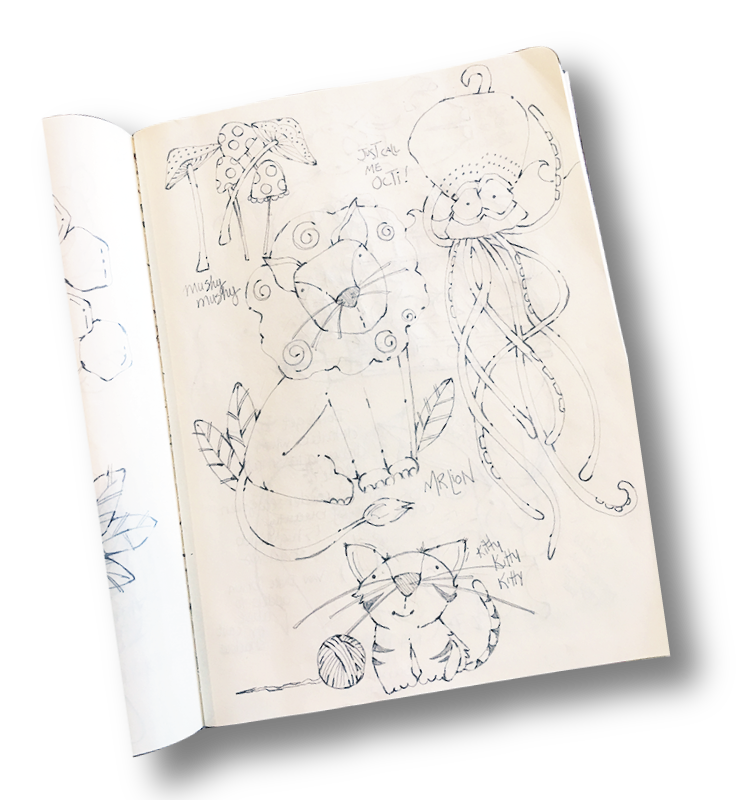
Just like planning your garden, planning a painting matters. You can plant a garden without seeds or plants and knowing how they are going to grow — so why expect a great painting to happen without preparation? I’ll admit it: I’m a planner. Supplies, timing, mindset—it all matters. If my studio is cluttered, my brain feels cluttered too. When that happens, I pause, tidy up, and reset so I can truly enjoy the creative process.
Make sure you have what you need before diving in—supplies, inspiration, or even a new skill to learn. Developing your creative process is just as important as planning your composition.
I’m always stretching myself—learning new techniques, exploring new software, practicing watercolor warm-ups, sketching daily, and keeping lists of ideas I want to explore someday. When I want to master a subject, I draw or paint small thumbnails over and over to build muscle memory. Growth happens when we show up consistently.
And eventually, all of that practice—every sketch, note, experiment, and “messy” attempt—comes together. Your signature style emerges naturally, telling your story in a way only you can.
And that? That’s the real masterpiece.